
Expanded metal mesh and sheets
Slit-and-stretched metal with interconnected diamond openings. Standard raised, flattened and grating forms provide open area for visibility, airflow and light.
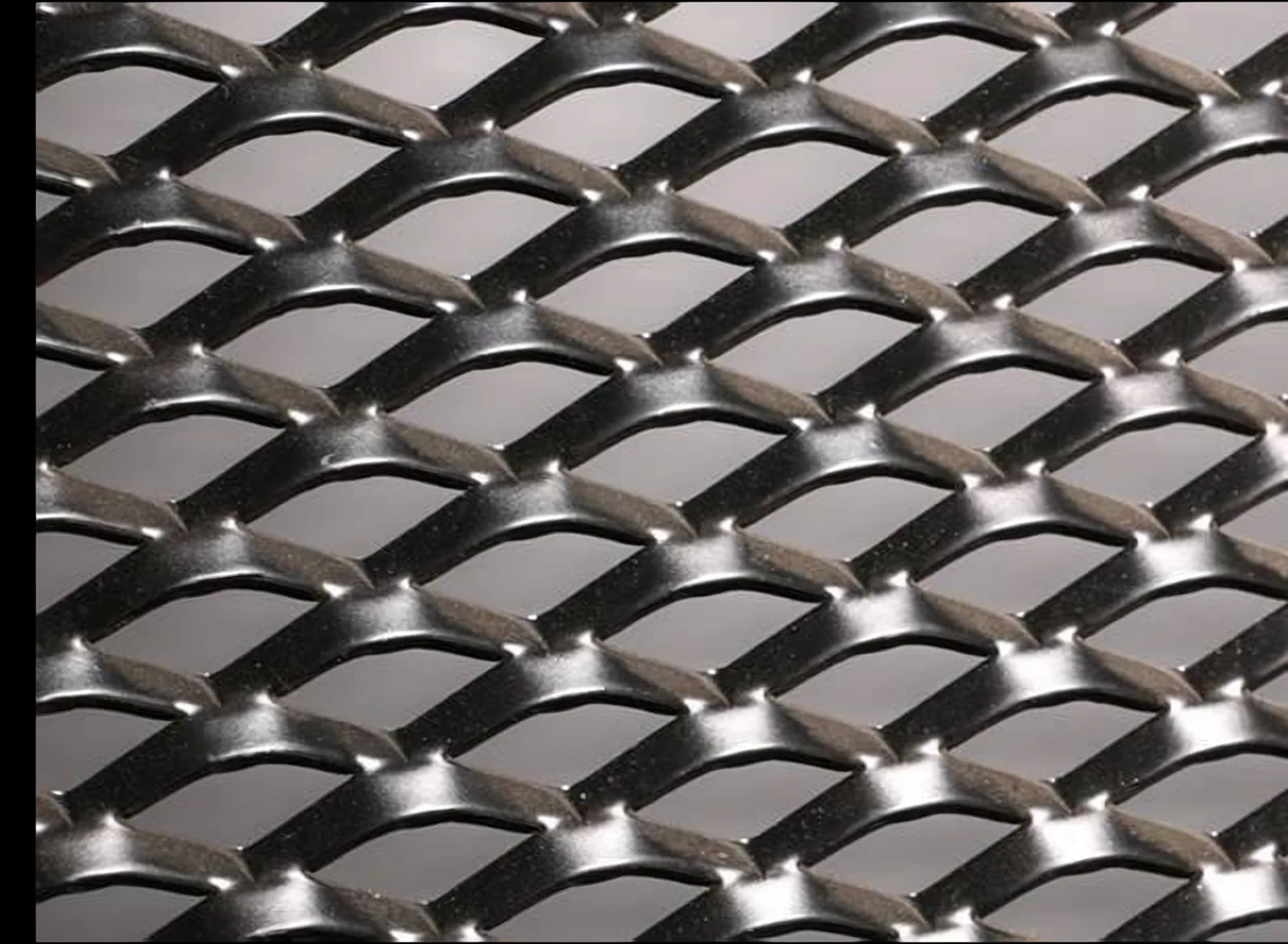
Technical characteristics
| Forms | Standard (raised), flattened and grating. |
|---|---|
| Opening | Diamond-shaped, interconnected strands and bonds. |
| Machine envelope | Up to 2.5 mm thickness and 1,250 mm sheet width (3 machines). |
Materials
Mild steel, stainless steel and aluminium are typical choices, as applicable. Material availability for a given mesh size is confirmed at enquiry.
Configuration and customisation
- Strand width and mesh pitch to specification
- Mesh orientation (long way / short way)
- Cut to panel size, framed or bent
- Rolled and seam-welded into tubes
Typical applications
- Guards, fencing and enclosures
- Architectural screens and ceilings
- Ventilation and filter supports
- Platforms and walkways (to engineering design)
What to include in your drawing or specification
To review feasibility and prepare an accurate quotation, please specify:
- Material grade and thickness
- Strand width
- Mesh pitch (long and short way)
- Raised, flattened or grating form
- Sheet size and orientation
- Quantity
Specification note: Load-bearing uses such as walkways must be designed and verified by a qualified engineer.
Manufacturing processes used
This product draws on the following in-house capabilities:
Frequently asked questions
What is the difference between raised and flattened expanded metal?
Raised (standard) mesh keeps the angled strands produced by expanding. Flattened mesh is rolled after expanding to give a flat surface.
Is expanded metal stronger than perforated sheet?
It depends on the design. Expanded metal keeps all the original material and is rigid for its weight; actual load performance must be verified for the application.
What is the maximum width?
The expanding machines are listed for sheet up to 1,250 mm wide.